
Lorenzo:
Fair ladies, you drop manna1 in the way
Of starved people
Portia:
It is almost morning2,
And yet I am sure you are not satisfied3
Of these events at full. Let us go in,
And charge us there upon interrogatories4,
And we will answer all things faithfully.
Graziano:
Let it be so, the first interrogatory
That my Nerrissa shall be sworn on, is
Whether till the next night she had rather stay,
Or go to bed now being two hours to day:
But were the day come, I should wish it dark
Till I were couching with the doctors clerk5.
Well, while I lie, I’ll fear no other thing
So for, as keeping safe, Nerrissa’s ring.
All Exit
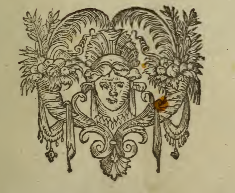 6.
The End
- "Mana", or "Manna,"is the food of Olympian gods in Greek mythology (spelled "Mana"), and the miraculous food God gave the starving Israelites in the book of Exodus (spelled "Manna".) It stands in for money in this metaphor, referencing religion and money, two of the play's main themes, and like the Manna in Exodus, it appears miraculously. In this line, it is spelled in the Biblical way to fit the iambic pentameter, and perhaps references Shylock, whose Manna/money they are receiving.
- Portia and Lorenzo complete a shared line. Portia’s line has been indented to reflect the completion of the iambic pentameter. Shared lines indicate the lines are connected in some way. In this case, Portia transitions the conversation away from recounting the play towards going home.
- Reference to Shylock’s last line of the play in 4.1, H4v. He is “content”, but this group is not yet, in spite of all they have done today.
- Legal questioning under oath.
- Graziano refers to Narissa’s performance as Portia/Balthazar’s "law clerk” from Act 4, Scene 1, a raunchy joke about ending up at the doctor.
- The book ends with a Printer’s Ornament in the French style. It also appears in Henri Estienne's A world of wonders, published in London in 1607 by a different printer. For more reading, see Shakespeare’s Lady 8 by Douglas Bruster
