Editorial note
Welcome to our reworking of Shakespeare through the lens of Sylvia Plath! On this page, we reference four of her poems — Wuthering Heights, Childless Woman, Sheep in Fog and For a Fatherless Son — to help reimagine the tone, affect, and emotions of the characters. For each passage, we weave in both direct language and abstract reference from Plath’s poems. In doing so, we lean into Hamlet’s distorted sense of self. By using Plath’s melancholy tone, we showcased how Hamlet would be written if all the characters shared the titular character’s mental ailments. Plath is a central figure in “confessional poetry,” a style of poetry which reveals the inner world of the writer. Ultimately, we rewrote all the characters through the lens of confessional poetry in hopes of imbuing them with the same emotional vulnerability with which Hamlet approaches us.
See additional footnotes for more information.
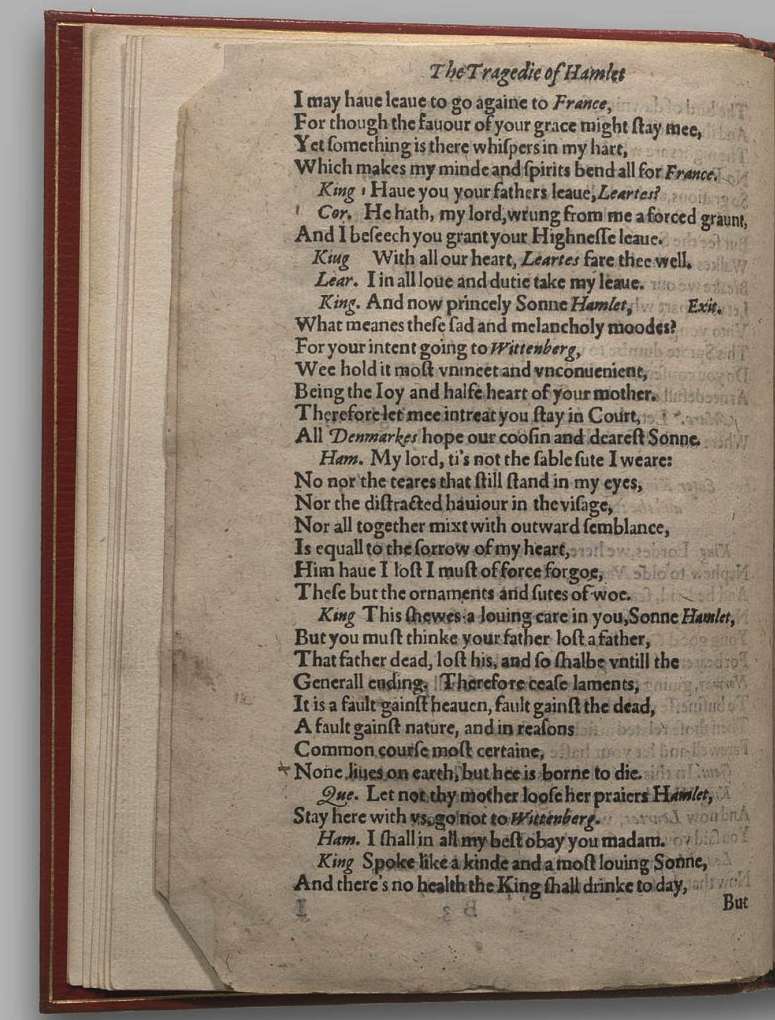
Lear: There is no life higher than the French grass
Or the hearts of Roosters, and the wind
Pours by like destiny, bending my heart,
Everything in one direction– southwest of Denmark.
King: Have you your father’s wind, Laertes?
Cor: He has my lord, bent me in his direction
And I beg of you, funnel your Highness away.
King: Take your bones, Laertes, flee through my fingers.
Lear: As hollow doorsteps, I go from grass to grass. (1) Exit
King: And now enwombéd child Hamlet,
What means these dark and bloody knots?
For your intent discharging to Wittenberg
We taste it most Ungodly, and Spider-like.
Being the rose, the ivory of your Mother
Therefore I utter you to stay in your pod
All the Forest rattles our gleaming and loyal child. (2)
Ham: My lord, tis not the rattling Forest
No nor the Hooves, or the dolorous belles
Nor the hills that step off into whiteness
Is equal to the blackening Morning
People or stars, Regard me sadly,
I disappoint them. O slow
My bones hold a stillness,
His far fields melt my heart.
Starless and fatherless, a dark water. (3)
King: And I love your stupidity, Son,
But you will be aware of an absence,
Growing beside you like a tree.
A death tree, an Australian gum tree,
The blind mirror of it, I look in
And find no face but my own, and you think that’s funny.
One day you may touch whats wrong
But right now you are dumb. (4)
Que: Let not thy pod rattle my womb, Hamlet
Don’t discharge, knot yourself to Wittenberg.
Ham: I shall in all my best obey you, Madam
Image credit: British Library (Halliwell-Phillips edition). The tragicall historie of Hamlet Prince of Denmarke. First Quarto. London: 1603.
Citing this page:
Plath, Sylvia. The Collected Poems. 1981. Edited by Ted Hughes, New York, Harper Perennial Modern Classics, 2018.
Shakespeare, William. Hamlet, B3v. London: 1603. Cacodemon Digital Shakespeare. Edited by Gahlia Abbud & Hugh Parker. Source Edition: British Library (Halliwell-Phillips Edition). http://cacodemonshakespeare.com/tragedies/hamlet/b3v.
Notes
- Inspired by Sylvia Plath’s Wuthering Heights. The poem speaks about visiting the Yorkshire moors with her daughter. A poem about the passage of time. While Laertes seems to be hopeful for his leave to France, Plath would have written this to mean that “destiny” is unwillingly bending him towards one direction. “Roosters” refers to the national animal of France. “Southwest of Denmark” refers to France.
- Inspired by Sylvia Plath’s Childless Woman, where she laments the suffering of a miscarriage. The poem speaks about an “empty pod” referring to her womb; we rework it to mean Court. The king is asking Hamlet to not leave Denmark and leave his mother empty.
- Inspired by Sylvia Plath’s Sheep in Fog. Here, Plath explores a feeling of disconnection with her surroundings. The mist reflects her inner fogginess. We rework the poem to play into the disorientation Hamlet feels by the loss of his father.
- Plath’s For a Fatherless Son. In this poem a woman speaks to a boy with no father; she tells him he will grow to feel his father’s absence. We reworked the poem to reverse the king’s response. Instead of him talking about the inevitability of Hamlet’s fathers death, he talks about the inevitability of Hamlet’s sorrow. In this version, the king agrees with his sentiment but condescendingly tells him he is too dull to truly understand death yet.
